EXTENDED BLOCKS FROM THE PHOTIC ZONE
Block printing has a long history in South Asia, with roots tracing back to the Indus Valley Civilization. It is a technique of stamping cloth with carved wooden blocks and natural dyes, carried through generations of artisans. Although the craft’s origins are found in China where it was initially used to reproduce religious texts, block printing flourished during the Mughal period, when textiles became markers of status and power. Coastal regions have played an important role in its development, providing water for dyeing and access to trade routes for export. With the arrival of the British East India Company, block printing circulated between South Asia and Europe, but industrialization later replaced many forms of handmade work with mechanical processes, leading local industries to diminish. Over time, the surfaces of the blocks have absorbed these shifting influences. Early Islamic geometric patterns later expanded to include animals, fruits, and floral forms. Different regions in South Asia have developed their own motifs shaped by local materials, climates, and dyes.
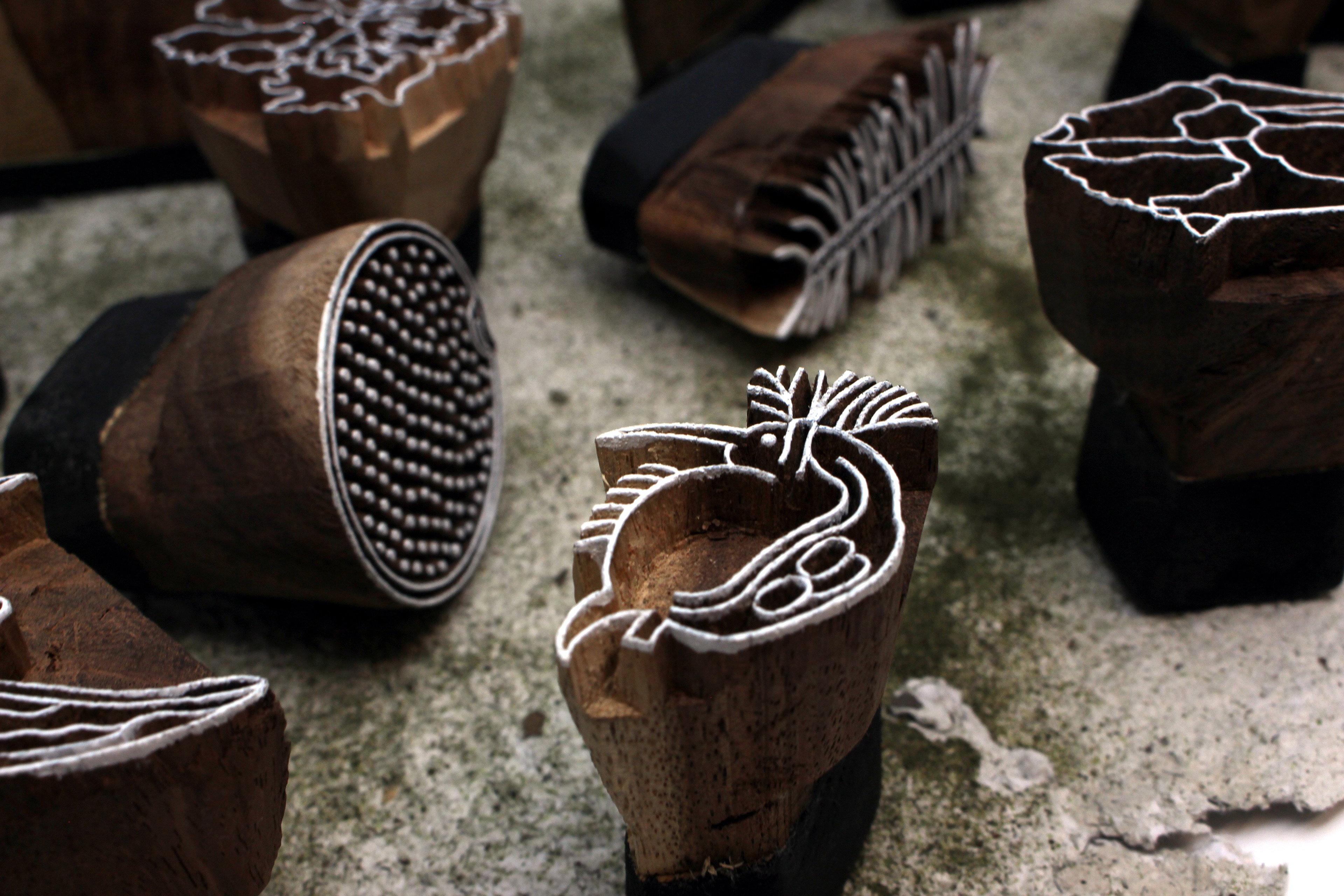
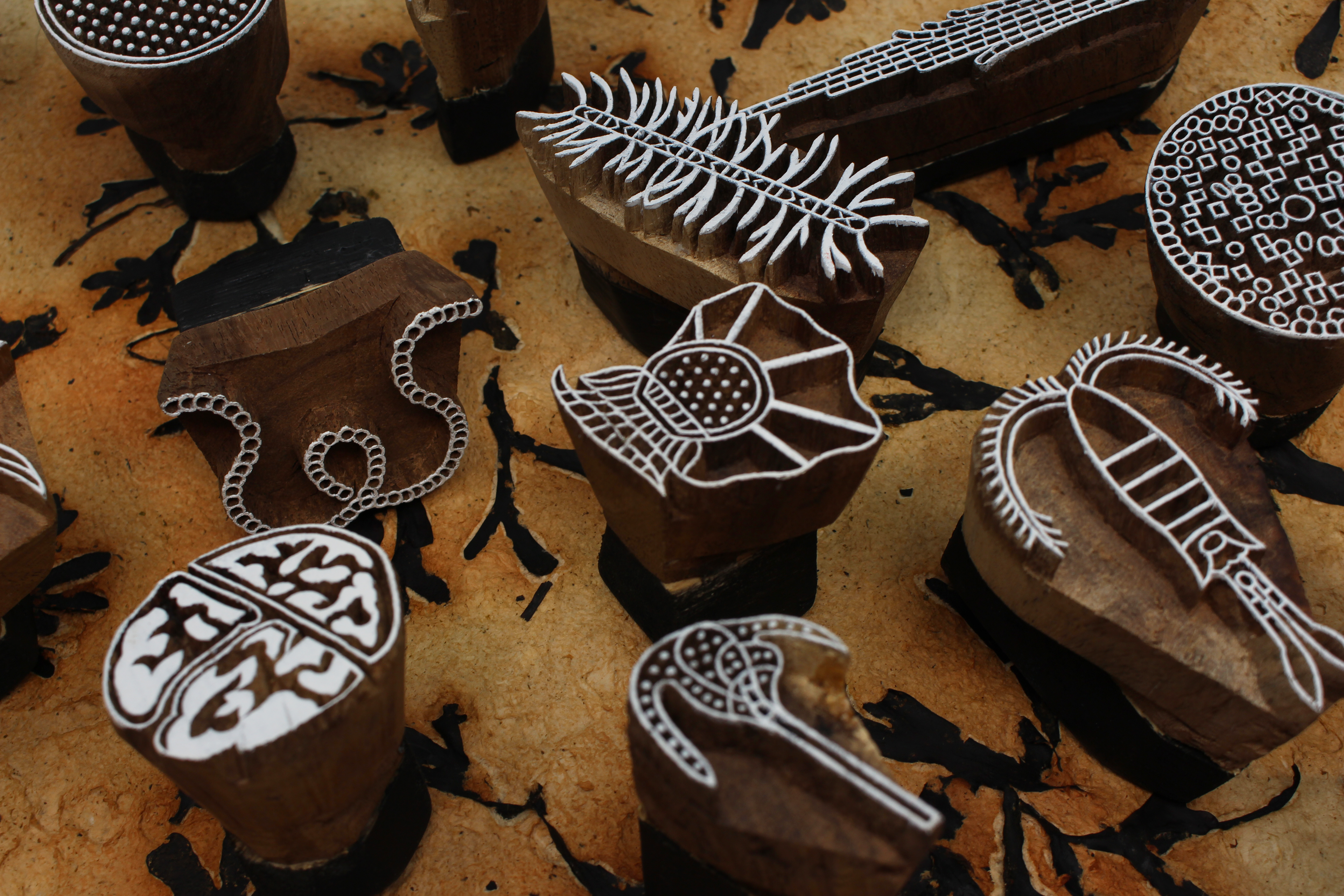
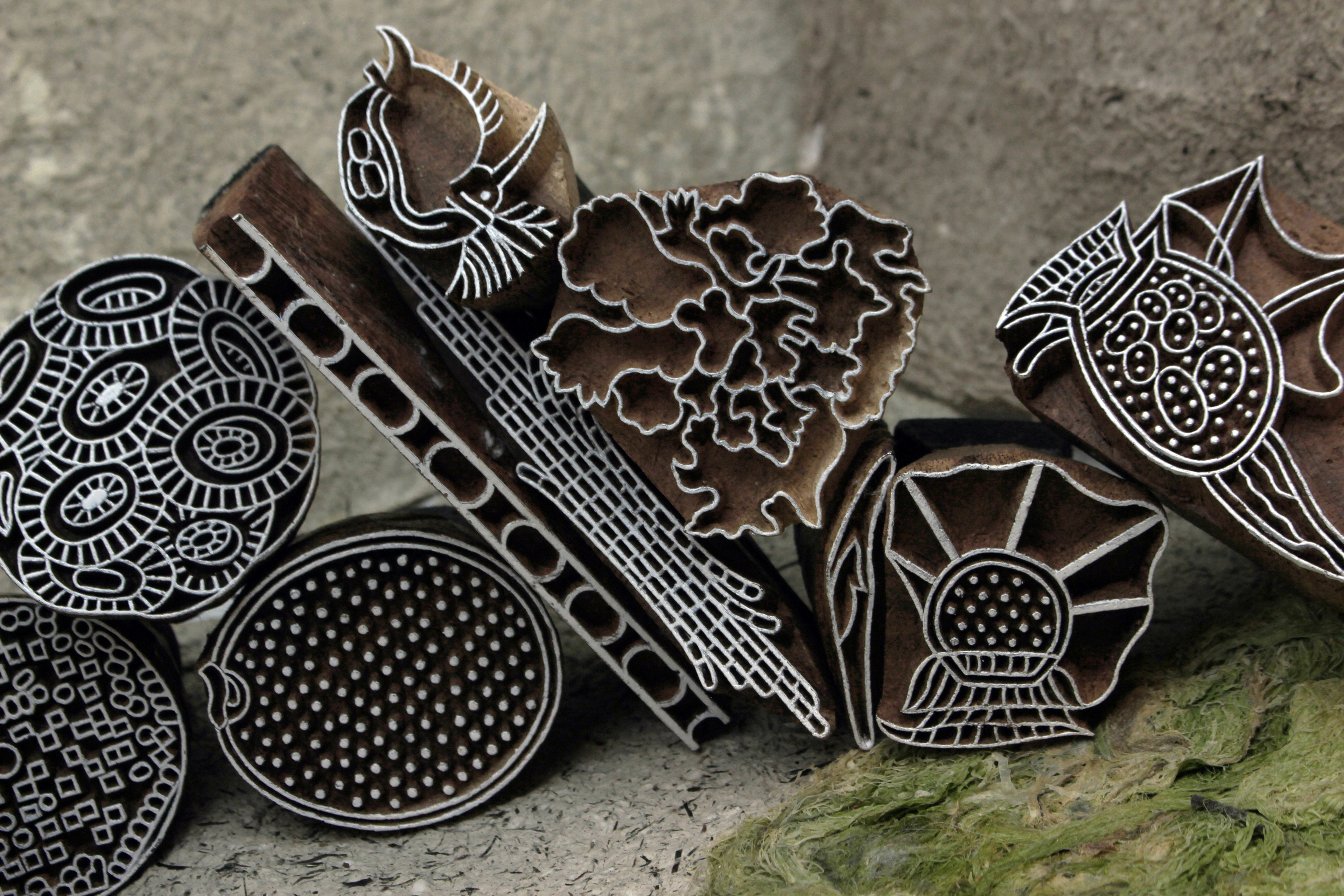
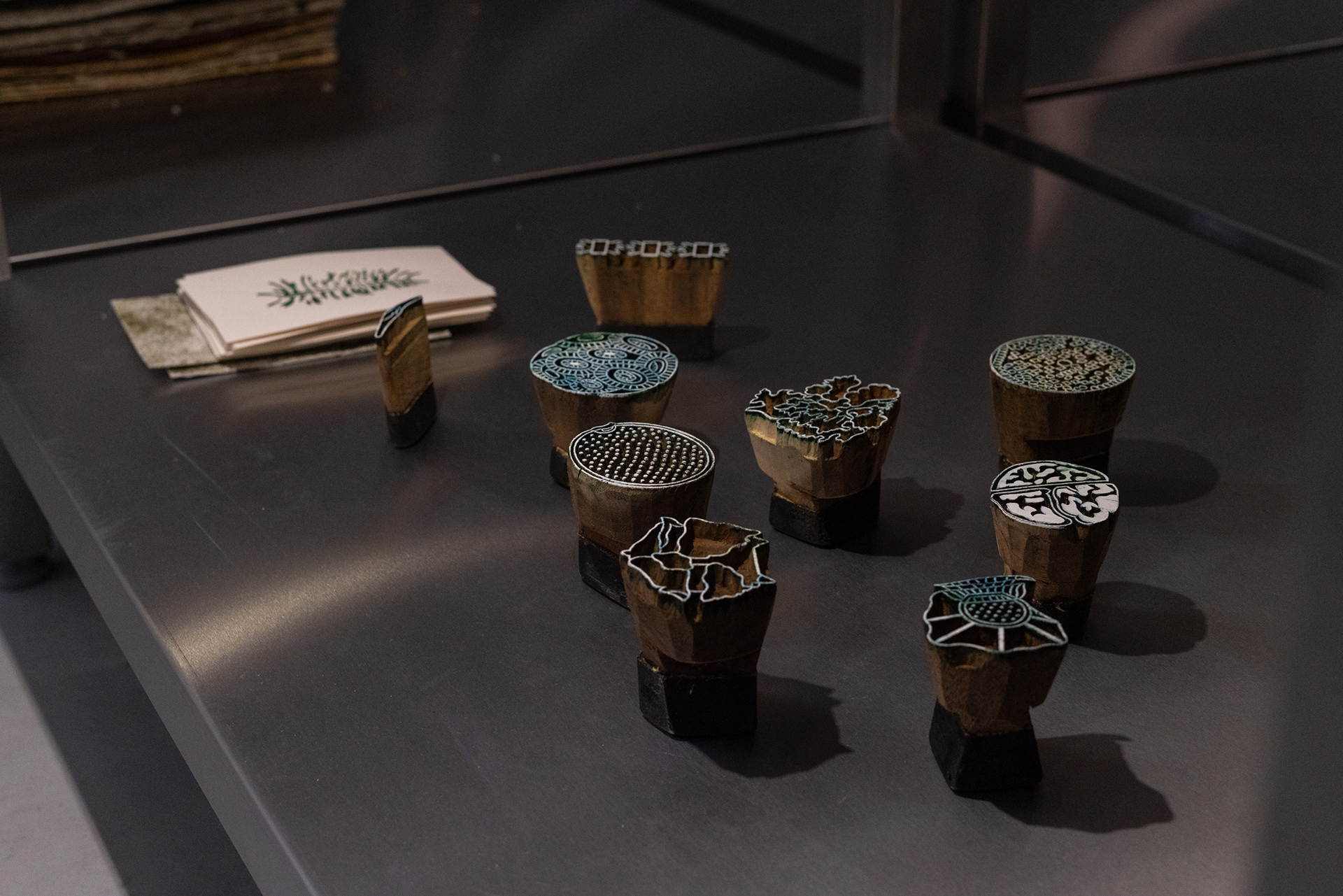
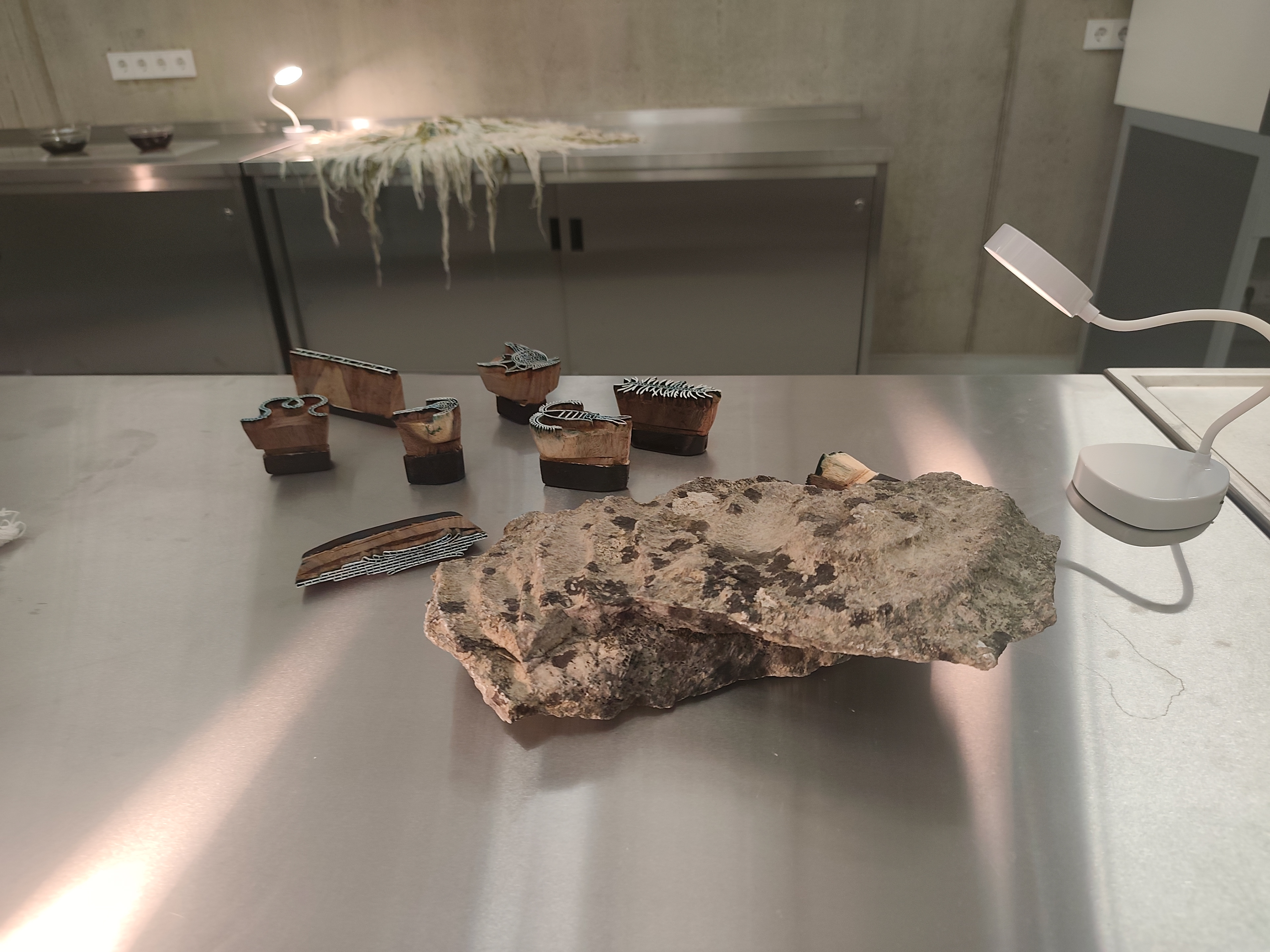
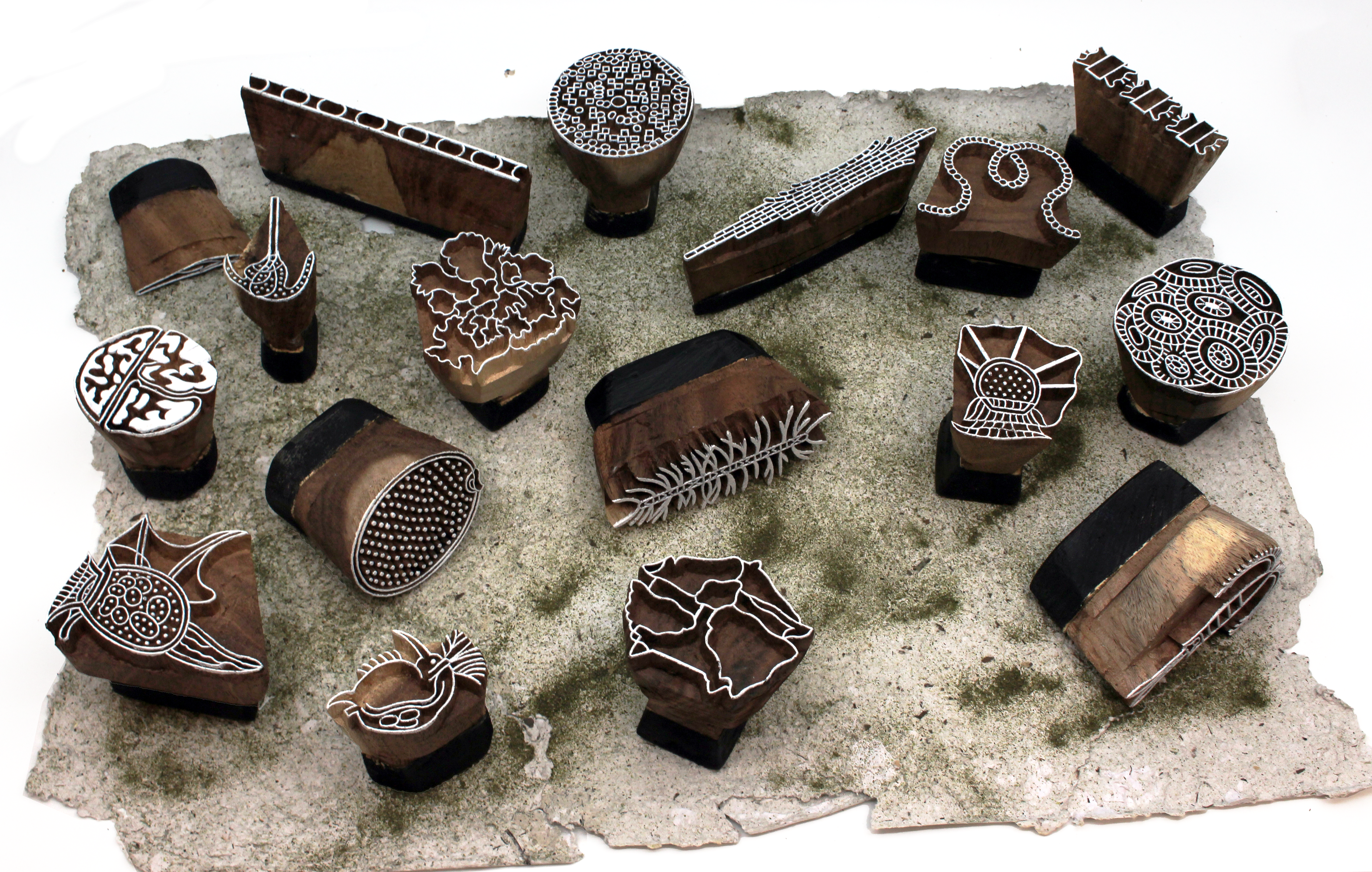
In this work, the block pattern is approached in the same spirit of responsiveness to the environment. The carvings draw from organisms
that shape the coastal ecologies of the Baltic Sea, extending the block’s surface vocabulary to register another shoreline and environment.
The current patterns focus on micro-inhabitants from the photic zone, the upper layer of the sea where sunlight penetrates and where
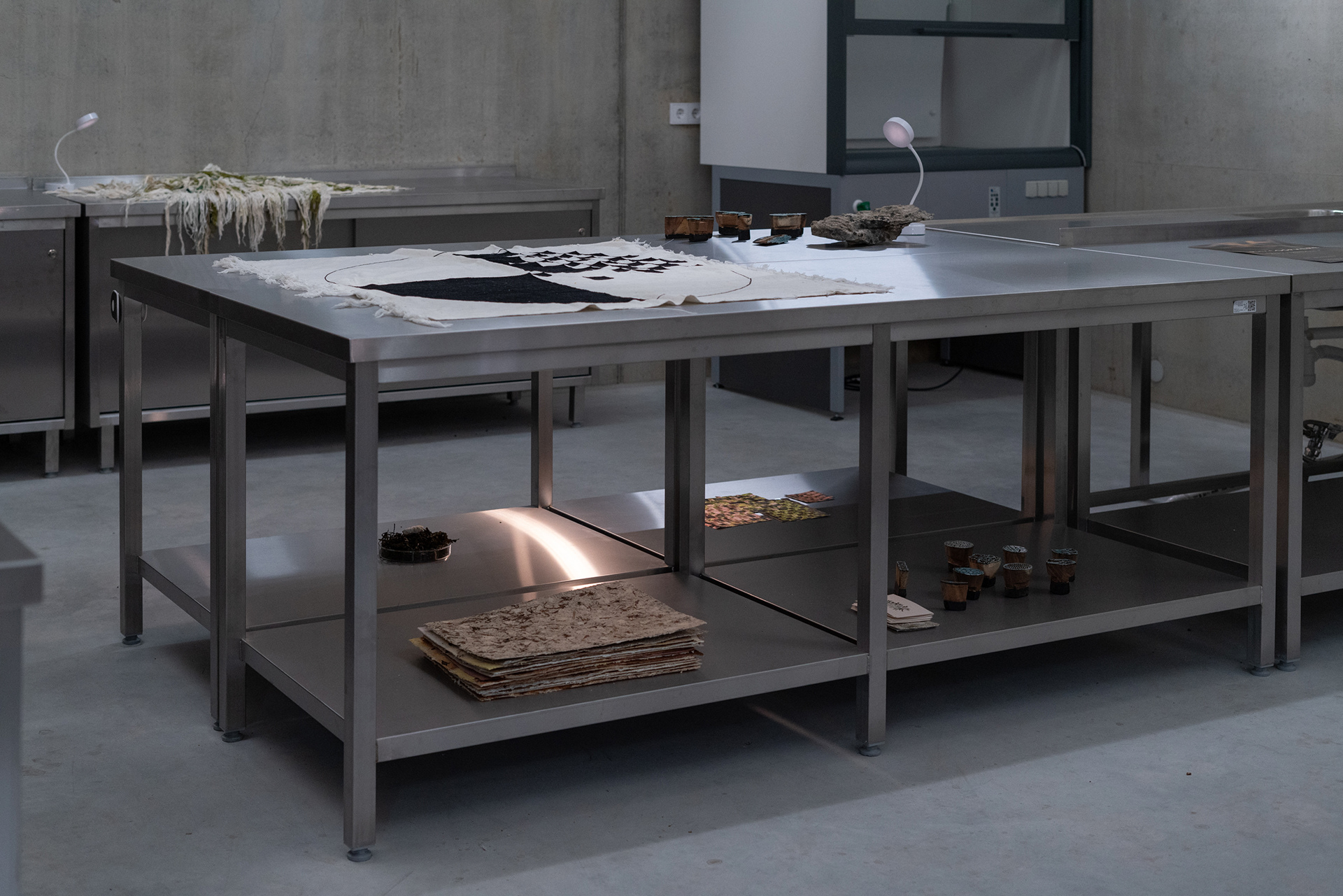
photosynthesis occurs. The dyes for printing are made from algae and seawater, and the surface paper made from different coastal species such as Eel grass, Cladophora, and Sargassum, inviting the Baltic sea as part of the material language of the print.
that shape the coastal ecologies of the Baltic Sea, extending the block’s surface vocabulary to register another shoreline and environment.
The current patterns focus on micro-inhabitants from the photic zone, the upper layer of the sea where sunlight penetrates and where
photosynthesis occurs. The dyes for printing are made from algae and seawater, and the surface paper made from different coastal species such as Eel grass, Cladophora, and Sargassum, inviting the Baltic sea as part of the material language of the print.
Materials: Black Tali wood (Sheesham). 17 Hand carved wood block prints.
Credits:
Wood carving was done with the help and teachings
of artisans from Aria Studio in Pakistan.
Photograph: Sarvin Sefatyar