Work title SOFT INDEX
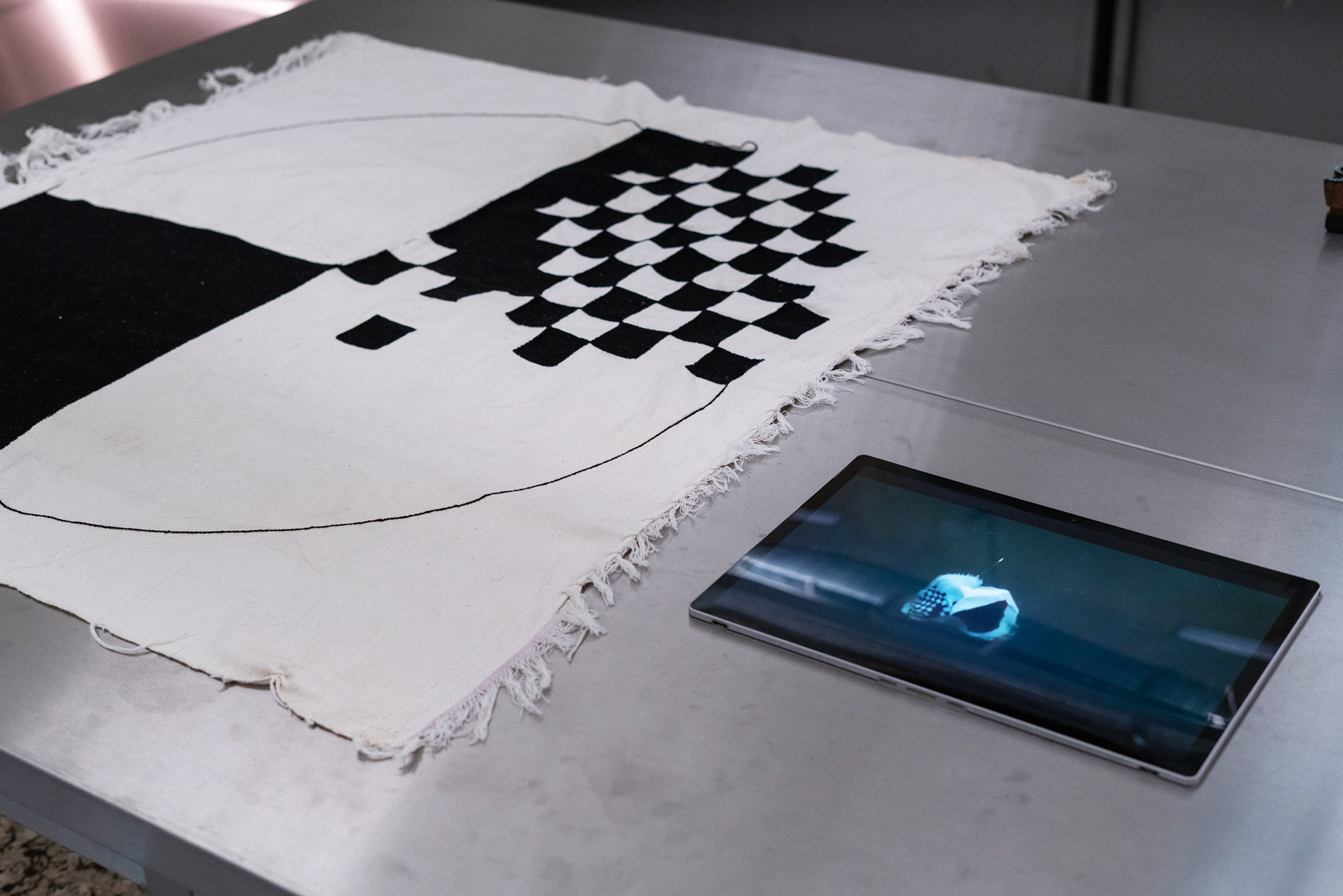
In the nineteenth century, the Italian physicist Angelo Secchi developed what is now known as the Secchi disk by lowering a dinner plate from the side of a boat. Over time, this simple device, marked with a black-and-white pattern became a standard tool used by marine biologists to measure water clarity as an indicator of aquatic health.
Water quality data is recorded at the moment the disk disappears from human sight as it is lowered into the water. This method is effective because the range of light detectable by the human eye corresponds closely to the wavelengths used by algae and plants for photosynthesis (400–700 nm). Water clarity is therefore partly related to the presence and growth of organisms such as algae and cyanobacteria.
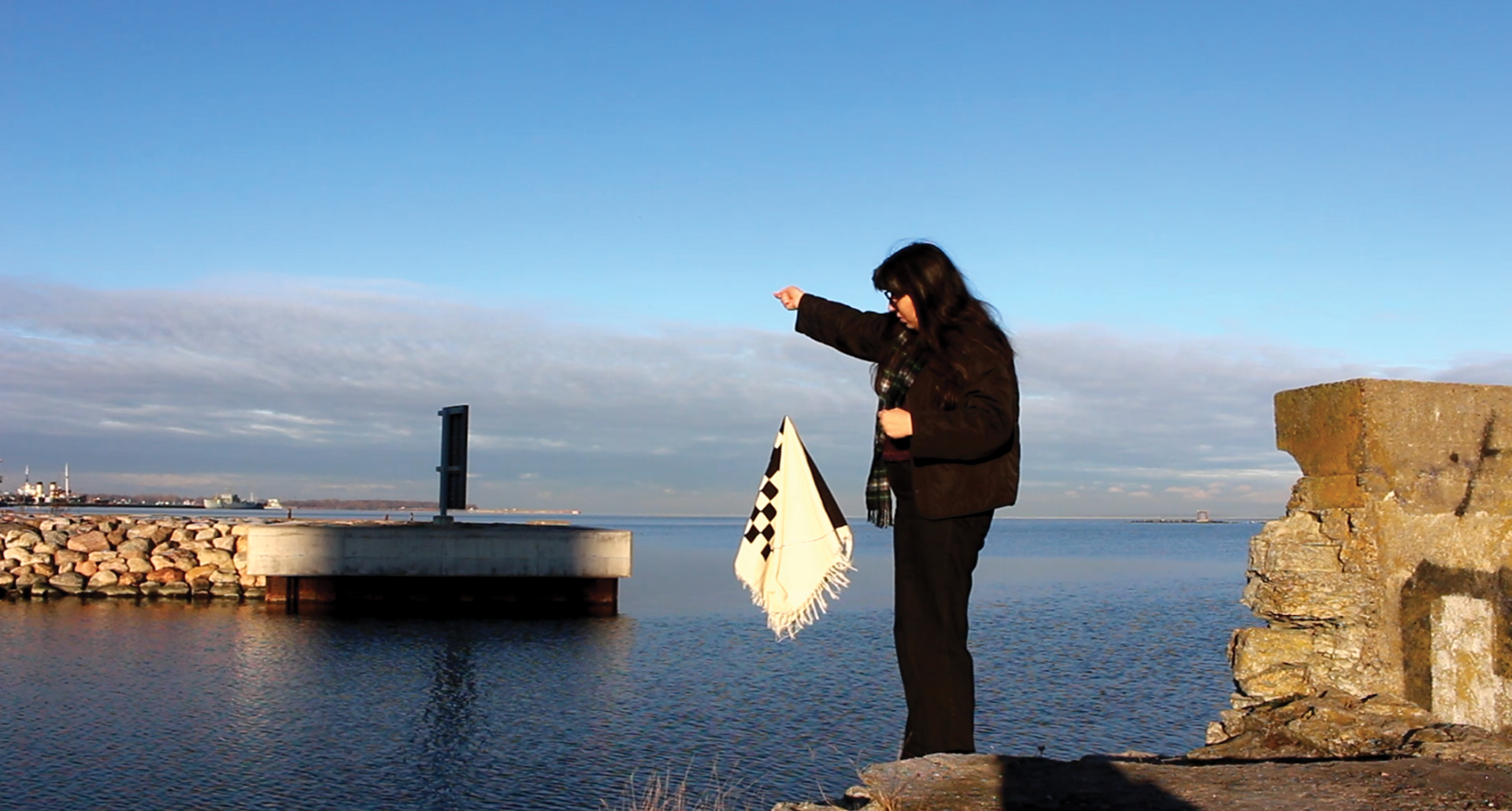
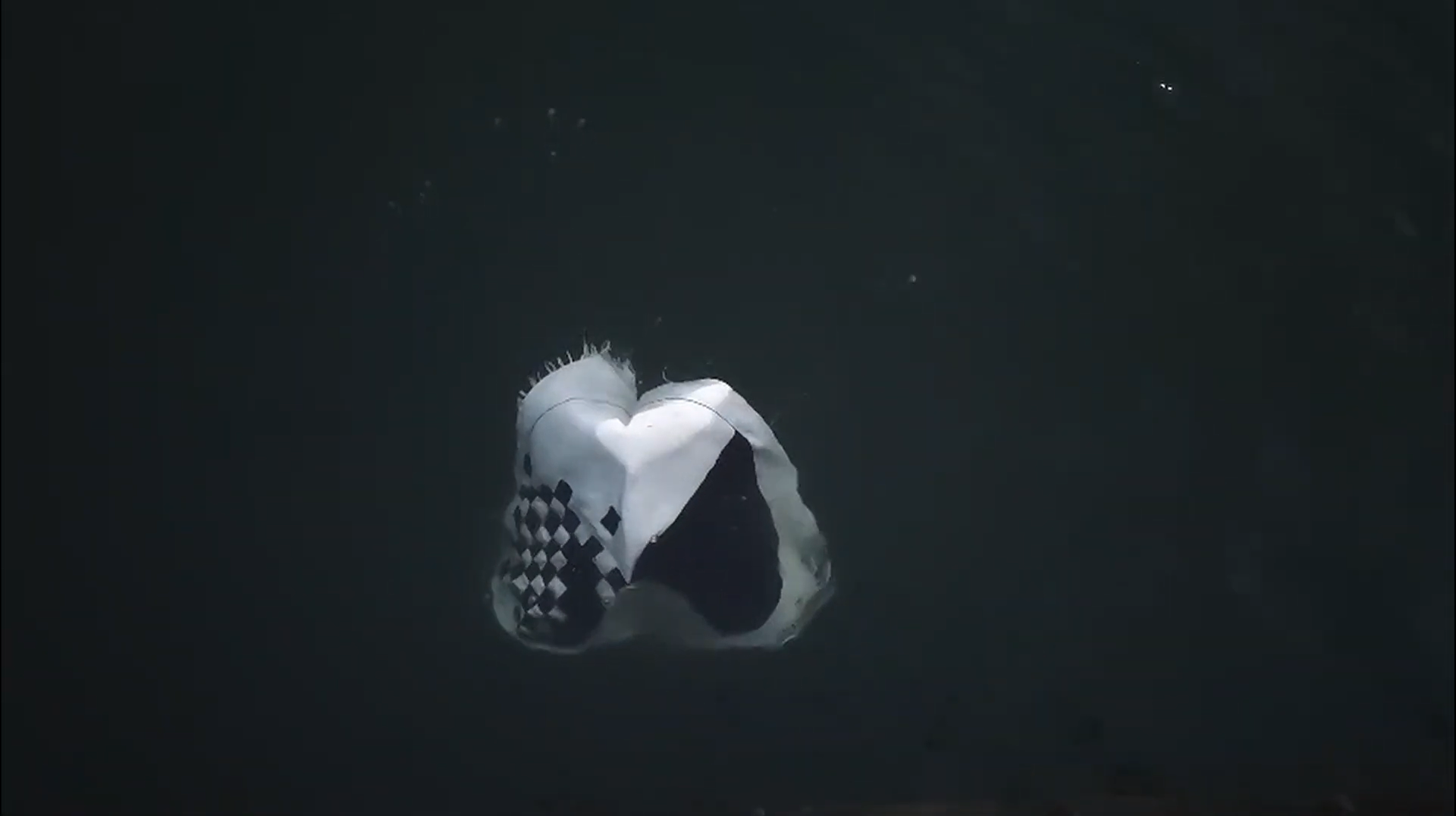
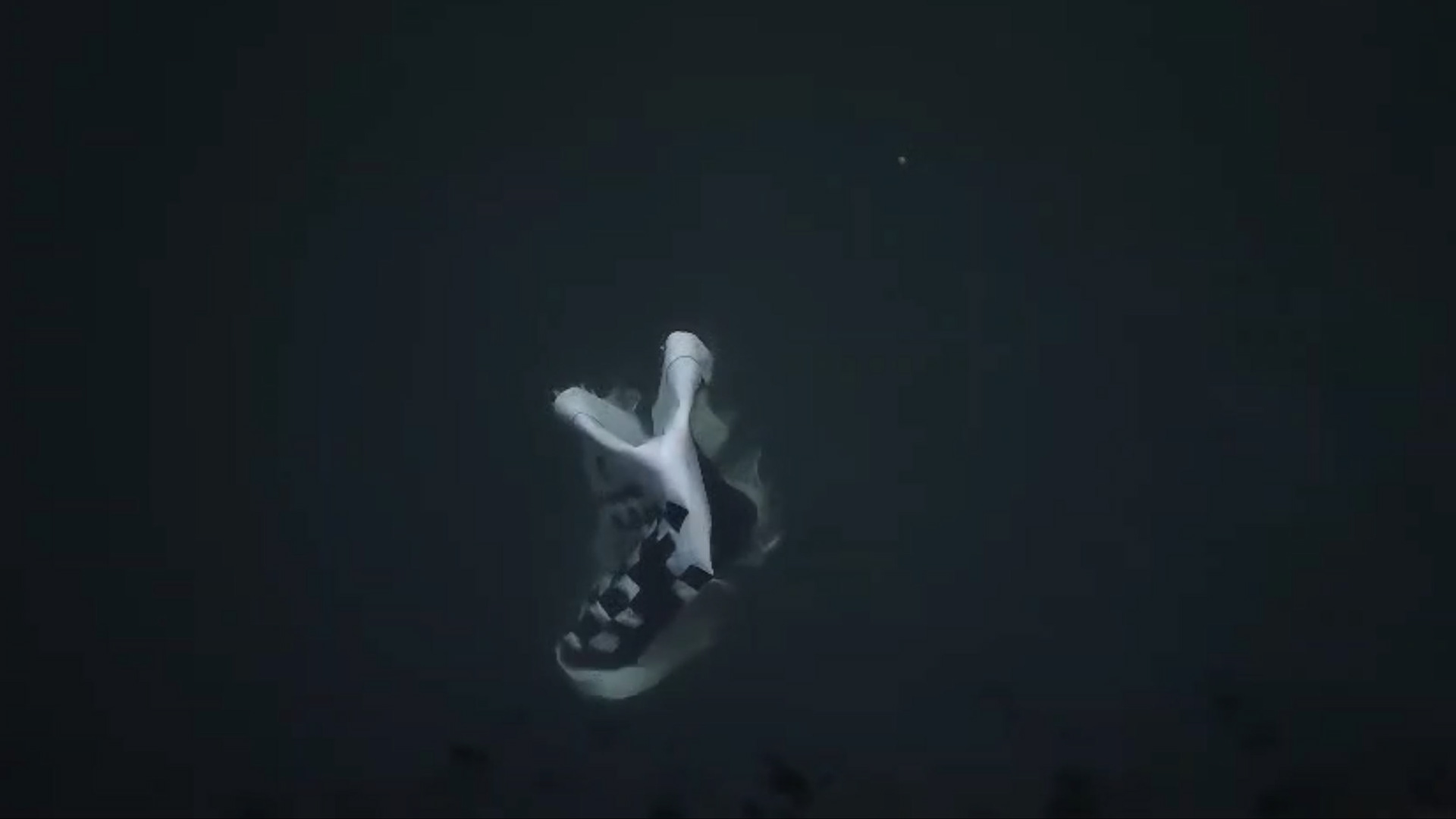
By translating the disk into a hand-woven textile, the softness of the material makes its relations visible. When lowered into the sea, Soft Index no longer aims to produce a fixed measure of water quality but instead stays with the conditions of the sea itself. As the textile enters the water, it absorbs, swells, and sinks unevenly. Light scatters across its surface and currents alter the rate of descent, refusing to hold still long enough for a stable measurement to form.
With Soft Index, the moment of disappearance becomes a material event produced collectively by more-than-human agents that reside within the environment of Baltic Sea and affect the water's quality.
Materials: Hand woven cotton and embroidery on four shaft handloom - Khadi. Video taken at the Baltic Sea.
Credits:
Concept and development: Aman Asif.
Textile made in support with Rameez Husnain.
Video and edit by Sarvin Sefatyar,
production assistance from Khadeeja Farrukh.
Concept and development: Aman Asif.
Textile made in support with Rameez Husnain.
Video and edit by Sarvin Sefatyar,
production assistance from Khadeeja Farrukh.