STRANDLINE
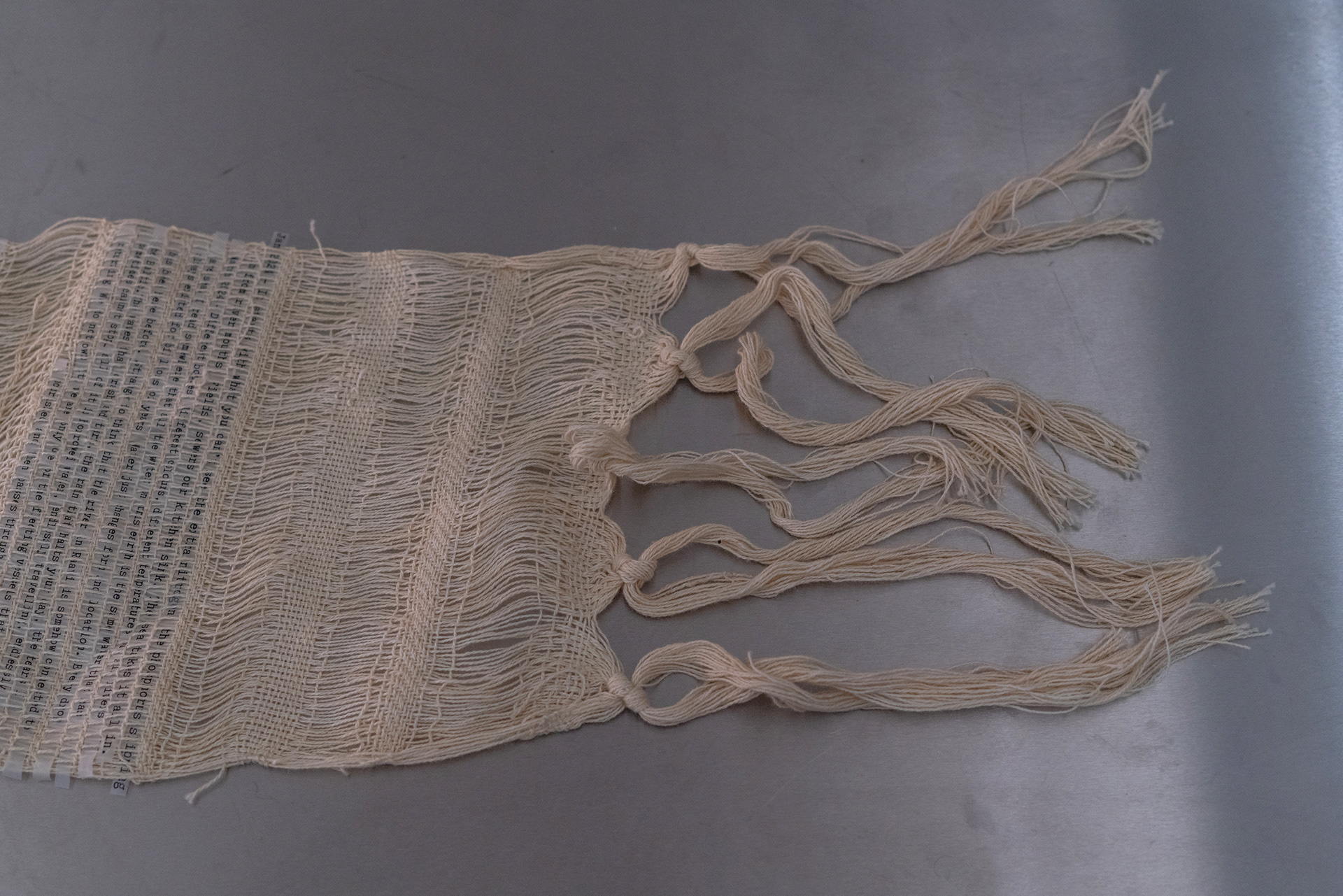
The work draws on the shared etymology of text, textile, and texture, all rooted in the Latin texere, to weave, to join, to fit together.
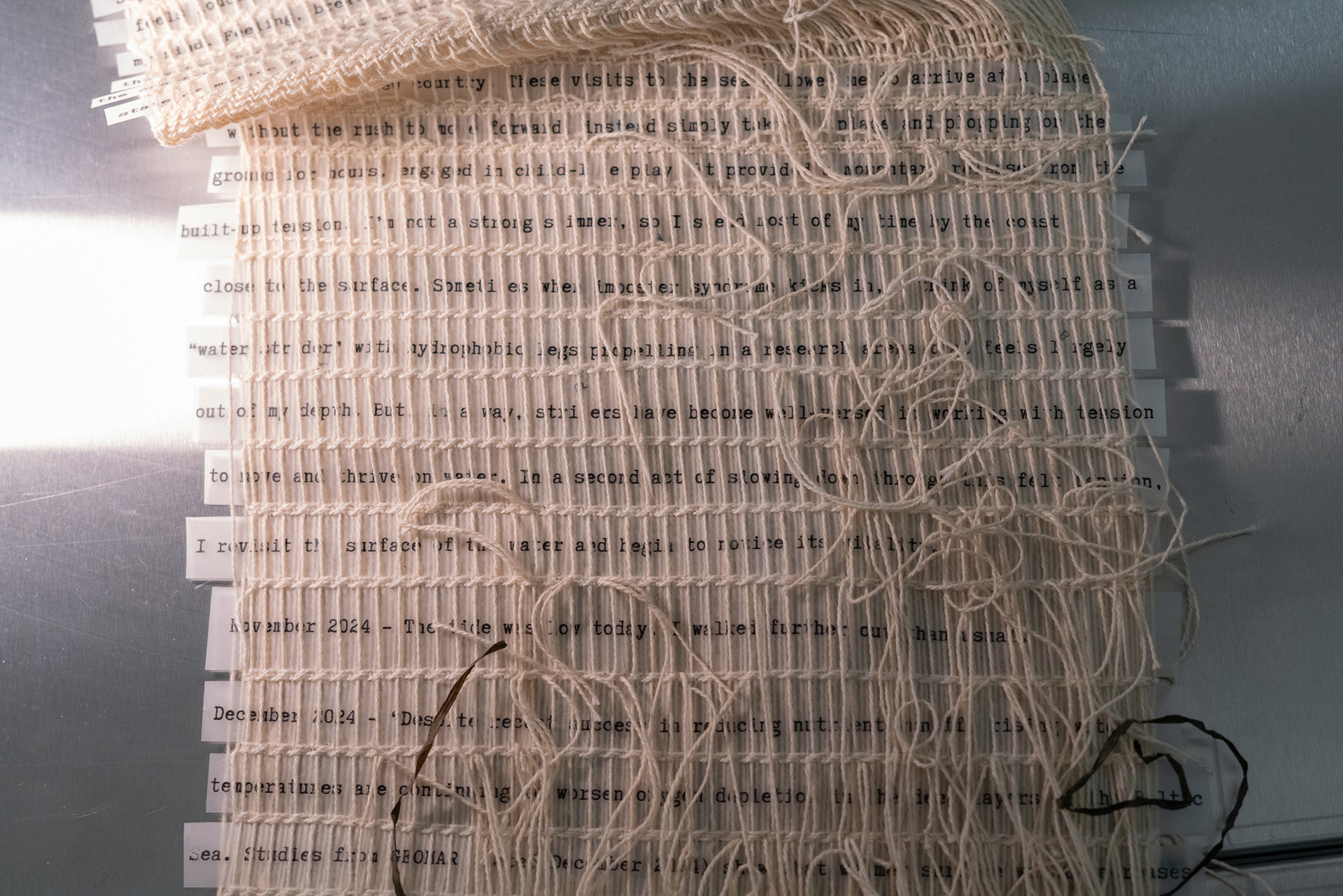
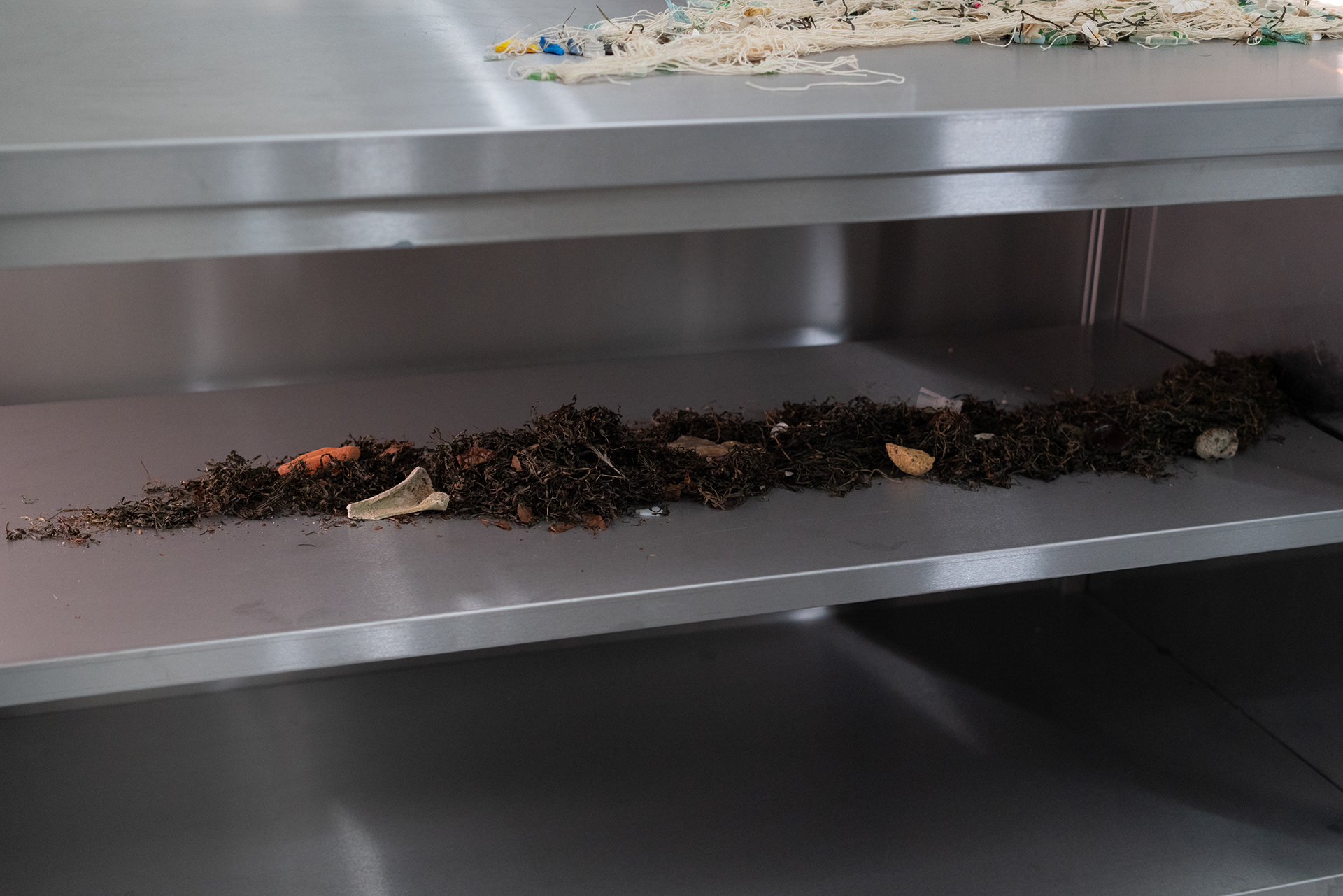
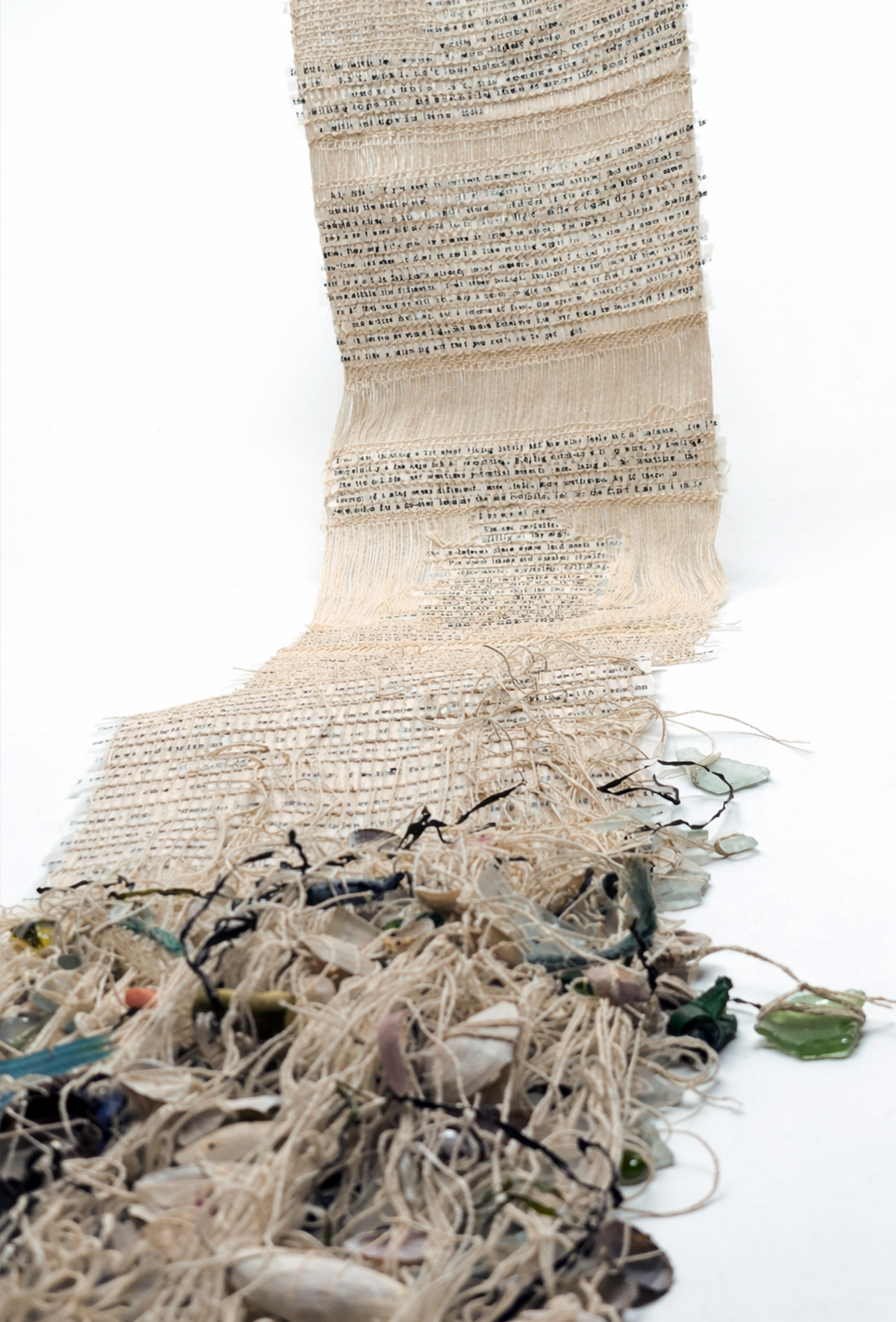
The woven text in Strandline was written during repeated visits to the strandlines of Tallinn. The strandline is a shifting material interface, composed of decomposing organic matter and washed-up debris that is temporarily gathered ashore with each high tide. At times, the writing addresses the Baltic Sea directly; at others, it turns toward other being at the Baltic sea and other beings of the Baltic sea.
Writing by the sea also draws on a longer cultural practice of addressing the ocean as a recipient of thought, memory, and longing. Practices such as the message in a bottle were used historically for distress signals, scientific experiments, memorials, and even love letters. These frame sea-based writing as an act of release and connection. The diary entries in this work operate in a similar register, situating writing as a relational practice that anchors the designer and the work in Tallinn.
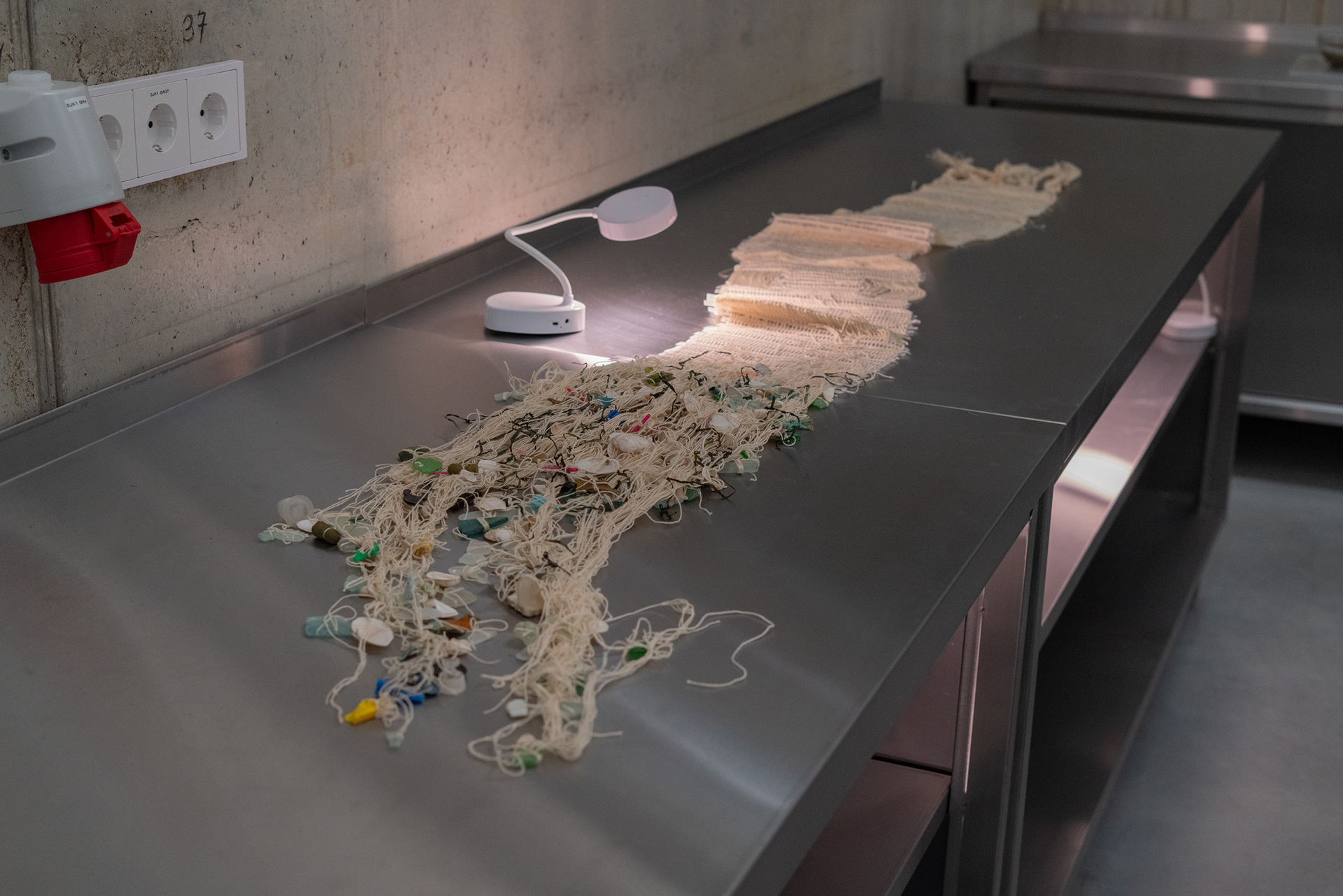
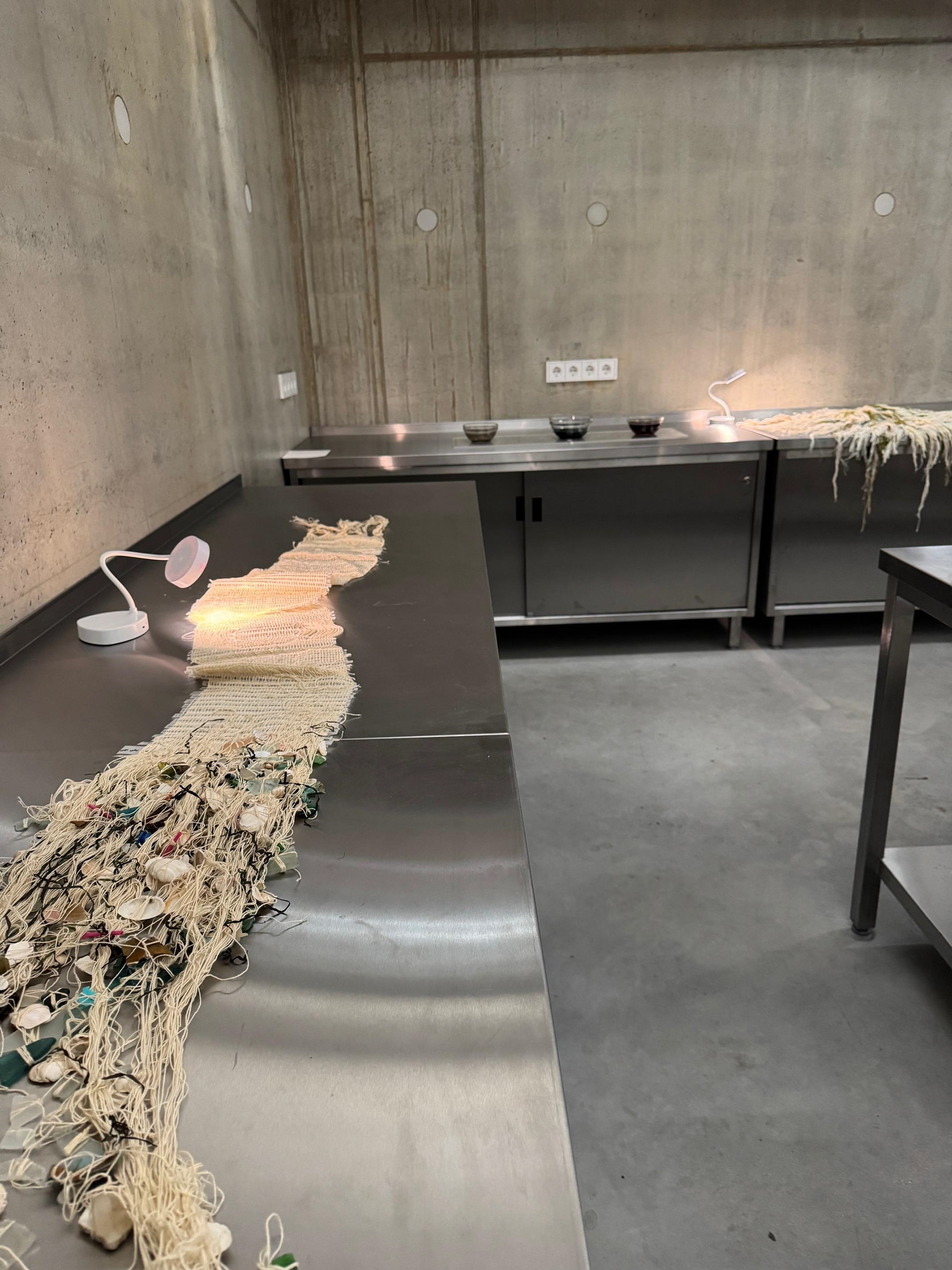
At the lower edge of the textile, objects gathered from the Tallinn coast are tied together with visible knots: sea glass, shells, seaweed, fragments of plastic, and unidentified animal bones. Some were collected alone, others in the company of a friend. Together, they weigh the weave down slightly, asking it to descend under the material presence of the place it references.
Materials: Hand woven cotton and embroidery on four shaft hand-loom - Khaadi.
Printed text excerpts from 2023-2025 on tracing sheet.
Material gathered during sea visits: Sea glass, Sea shell, Seaweed,
Eel grass, Found plastic, unidentified animal bones.
Credits:
Concept and textile development: Aman Asif.
Textile made in support with Rameez Husnain.
Photo taken by Aman Asif with support from Marillis Siigart